Surely offering guidelines and criteria of how a blog post should be written defies the very definition of blogging?
Blogging, as I have grown to understand it, is an individual experience in which opinions and experiences are articulated for a particular audience. The key words there are "individual," "opinion," and "experiences," as blogging cannot possibly follow some sort of structure. Essays and other academic endeavors follow a degree of structure and rigidity, however, blogging is meant to be an outlet of individualism and informal opinion. I cannot idly read articles from fellow bloggers that suggest that the way a large amount of people write is wrong.
Assuming that individuals write for other people's benefit is the first problem. That is, people do not necessarily write for other people, blogs are often treated as electronic journals. Personally, I write to articulate thoughts and opinions that have been on my mind -- I do not intend my writing on my blog to have the same characteristics as an informative comment in a respectable newspaper.
Blogging opens the experience of writing to the masses, which is a wonderful thought. Blogs allow for people to be open with their opinions, and it also allows people to express themselves however they see fit. As soon as police are assigned to blog posts limiting the prospect of individual opinion and expression, then surely the very spirit of blogging has been lost.
The statement "paper-writing produces papers while blogging produces writers" is very true, however, paper-writing and blogging are becoming dangerously similar thanks to internet theorists who believe in the standardization of expression and opinion. I cannot willfully endorse such criteria as it seems to me that they are wholly contradictory, and logically flawed.
Blogging should be about the message, not about the way in which the message is written.
Tuesday, April 29, 2008

Tuesday, April 8, 2008
Thursday, April 3, 2008
Cultural Misunderstandings
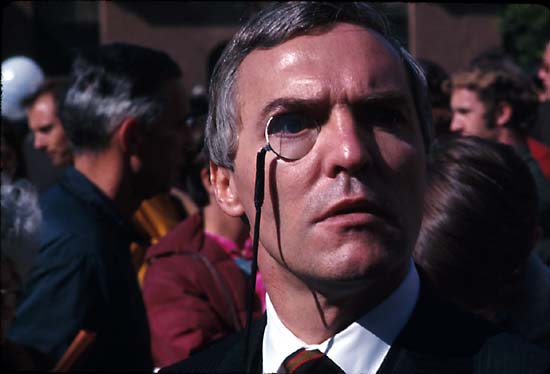 Cultural misunderstandings are some of the most concerning problems in the world today. From cultural stereotypes, to blatant generalizations, it is far easier for individuals to misunderstand a group of people than into experiencing the culture itself. The problem with this is that there are two types of misunderstanding: the concious misunderstanding, and the unaware misunderstanding.
Simply, the concious misunderstanding generally manifests itself in humor. People from France are bastards, people from England drink tea more than water, and people from America are fat. No one usually takes any serious offence from statements such as these -- I certainly don't. The central issue is when people make statements such as these and do not realize that what they are saying is a generalization, or a lie. For example, when people claim that people of certain religions are conditioned to dislike others. I have heard countless people seriously believe such an idea. This is unacceptable.
In my opinion, this is a problem that sprouts from education systems around the world. As children people are encouraged to believe whatever they are taught in school or whatever they read in textbooks. The fact of the matter is that these are largely recycled opinions presented in an intelligent format. If individuals fail to experience the world for themselves, or to engage in further reading, then it is likely that these inaccuracies will perpetuate themselves in society. If individuals choose to rely upon recycled ideas then there is no hope for the advancement of the human race.
Individuals must not rely solely upon the opinions and ideas presented before them. Everyone is entitled to their own opinions, and therefore, everyone is entitled to question arguments set out before them. If discussion and argument cease to exist, then cultural misunderstandings will continue to spread -- and not in the humorous sense.
... Seriously though, English people do drink a lot of tea.
Tuesday, March 25, 2008
Updated Posts
I went back and updated most of my posts. Some are a little shorter now, might make them slightly easier to read.
Sunday, March 23, 2008
Textbook Knowledge
 I cannot help but feel the youth today is being directed towards a false sense of knowledge. All over the world today schools are employing an attitude that seems to enforce the notion that true knowledge can only be attained through the reading of textbooks, and the learning of monotonous facts. The value of human experience is increasingly discounted in favor of rigid facts and values.
As John Stuart Mill argued in his essay On Liberty, true knowledge can only be achieved through discussion, not through blind obedience to rigid unchanging values and beliefs. Religion, for example, often falls victim to individuals who tend to hold opposing beliefs. If religious peoples of opposing values opened a free discussion between each other then, perhaps, new understandings of faith might be established.
For the sake of advancement, people must allow themselves to experience life, and to develop their own opinions regarding contemporary issues. If Newton hadn't questioned an apple falling on his head then, perhaps, we would not have such a far-reaching understanding of gravity as we do today. Of course he had a strong understanding of science through academia, however, Newton also felt free to look at the world around him and to question the experiences he had within it.
Don't get me wrong, I do not mean to contend with the value of textbooks and education, rather, I believe it is pure ignorance to rely on these means as the sole manner through which knowledge can be attained. Just because it wasn't written or discovered by an academic, does not mean it is not of value. Individuals should be encouraged to challenge established social values and beliefs, for this is the only way the human race can improve. Hope should lie in the notion of change, not in a form of precautionary pessimism. Perhaps if individuals felt comfortable enough to allow their feelings and convictions to be challenged by people of opposing beliefs then the issue might be taken a step closer to its ultimate conclusion. Unfortunately, it seems far too many people take contemporary issues personally, rather than objectively.
Don't believe this is a contemporary issue? Then please explain why one of the most vehement debates in politics today is referred to as "Experience versus Change."
Monday, March 17, 2008
Deal with It
 I'm becoming increasingly angry with the volume of unnecessary activism in the world today. I don't mean to undermine the work of peace activists, rather, I have a particular problem with people who have become self-proclaimed health enforcement agents, or what I like to call informed activists. Usually the informed activist has never felt the need to express their upset in any intellectual form, nor has the informed activist ever felt the desire to throw themselves in front of a rush hour train to make a point. Rather, their behavior largely consists of insensitive, egotistical displays of condescending ignorance. I'm sure you're familiar with this setting, for example: an individual pulls a pack of cigarettes out of their pocket at a bar. In this situation the informed activist would begin to cough unnecessarily, approach the individual holding the pack, and list the potential dangers of smoking.
The informed activist is convinced that, of course, the smoker has never noticed the enormous Surgeon General's warnings across the pack of cigarettes that sits regularly in their pocket. Their reasoning: smoking is detrimental to your health, therefore a smoker must be some sort of outer-Mongolian caveman that cannot speak English as they are now smoking. Furthermore, the informed activist will often snatch a cigarette from your hand, grind it between their thumb and forefinger, and wait for you to thank them as if they have offered some sort of spiritual epiphany in your life.
People smoke, deal with it. It is a choice that an individual makes in full understanding of the risks. Despite what many will have you believe, smoking does provide some attractive features, such as stress relief. I'm not advocating smoking if you're stressed, rather, I am pointing out that people have their own reasons.
Smokers have their own opinions just as activists do, except they are not obnoxious and inconsiderate enough to tell you about it at each opportunity they have a chance. I don't know about you, but I personally enjoy the occasional cigarette, and I'd appreciate it if I didn't get a twenty minute lecture from you next time I choose to have one.
Take a moment to watch this. There is a funny, but good point to be made: http://www.youtube.com/watch?v=GSV9MhHUYeM
Saturday, March 15, 2008
The Dilemma of Prescription Drugs

I have come to observe a somewhat unhealthy intrigue with prescription medication in the United States. Individuals seem to be walking encyclopedias of drug-related information, which in my eyes is a position that seems more suited to a Doctor than a student. In the USA individuals tend to view drugs as devices through which human experiences can be enhanced, rather than as tools to aid in recovery from sickness or injury. They have the same connotations as a minor plastic surgery, that is, they simply allow for an inflated sense of individual confidence.
Yet, I cannot simply discount the worth of these drugs. Perhaps there is merit within the notion of bettering oneself through synthetic means. Could it not be said that the reliance upon a calculator to complete complex mathematics holds parallels to a reliance upon adderall to complete large amounts of work? Perhaps the link is weak, however, the point is there: modern scientific advances do include methods through which all manners of human endeavor can be enhanced and improved. In an age of increasingly complex technologies, economies and socio-political cultures, are these advances so unwelcome?
Thus, a dilemma is formed. One can take prescription drugs and improve productivity, however, this would then open the door to insomnia, depression, and particularly, dependence. Or, one can choose not to take prescription drugs and not perform as effectively as an individual on a performance enhancing drug, yet, this individual will remain in greater health and may even be able to work a longer, more fruitful career.
In my opinion, it is an issue that must only be judged by context. If an individual needs to complete an abnormally large amount of work within a small amount of time, and does not often take drugs such as Adderall, then this is acceptable. If an individual chooses to take an Adderall to stay awake for longer at a party, this is pure stupidity. Perhaps the FDA should relax their stance on drugs such as Adderall: What do you think?
Subscribe to:
Posts (Atom)